

Structural Dynamics Testing Solutions
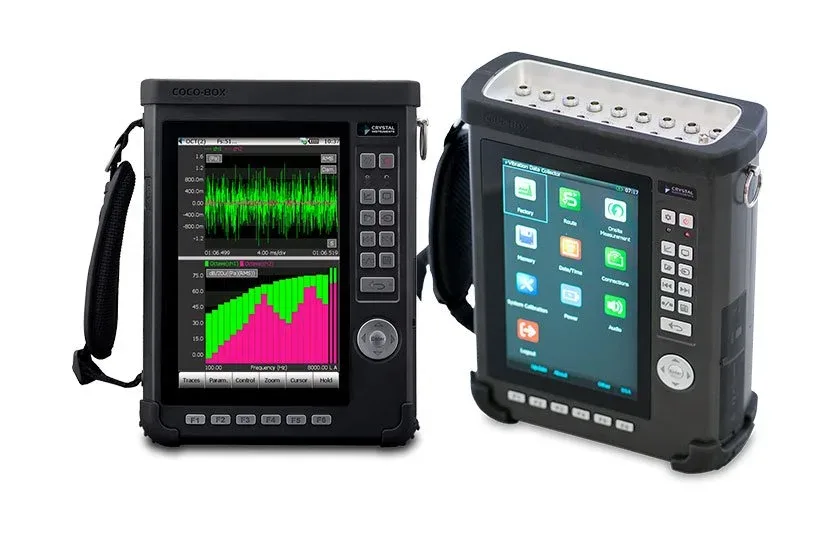
High-channel Spider-80X and handheld CoCo-80X capture force/response FRFs, desc…
A practical survey of Experimental Modal Analysis applications, from troubleshooting and FE correlation to response prediction and structural modification.
Made by Crystal Instruments Corporation. Supplied and supported in China by WTC (West Technology Corporation). · Manufacturer page ↗
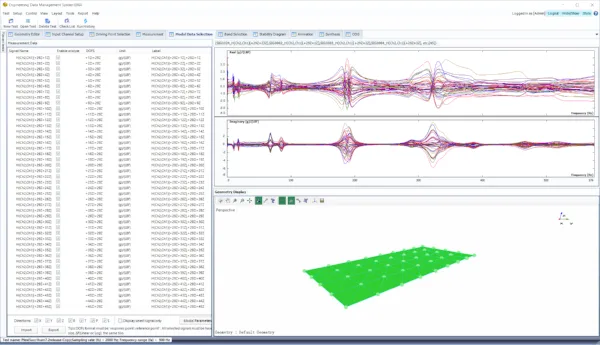
Experimental Modal Analysis (EMA) has grown over recent decades into a mainstream technique for studying structural dynamics. By applying a known excitation to a structure and measuring its response, EMA decomposes complex dynamic phenomena into decoupled modes, each described by natural frequency, damping and mode shape; the collection of these modal parameters is the modal model. Compared with raw FRFs or vibration responses, the modal model describes a system in a decoupled, explicit way, so its applications all revolve around using that model for design, troubleshooting and analysis.
This technical note, written by a Crystal Instruments senior product manager, reviews the principal uses of the modal model. The classic application is troubleshooting: measured natural frequencies, damping and mode shapes reveal the root causes of vibration problems. Next is correlation with finite element analysis, where a measured modal model is used to correct an FE model that is inevitably imperfect due to the complexity and uncertainty of a real structure. Other applications include structural dynamic modification (predicting the effect of hypothetical changes in mass, stiffness or damping), FE model reduction, forced response prediction, force identification as an inverse problem, sub-structural coupling, and active vibration control.
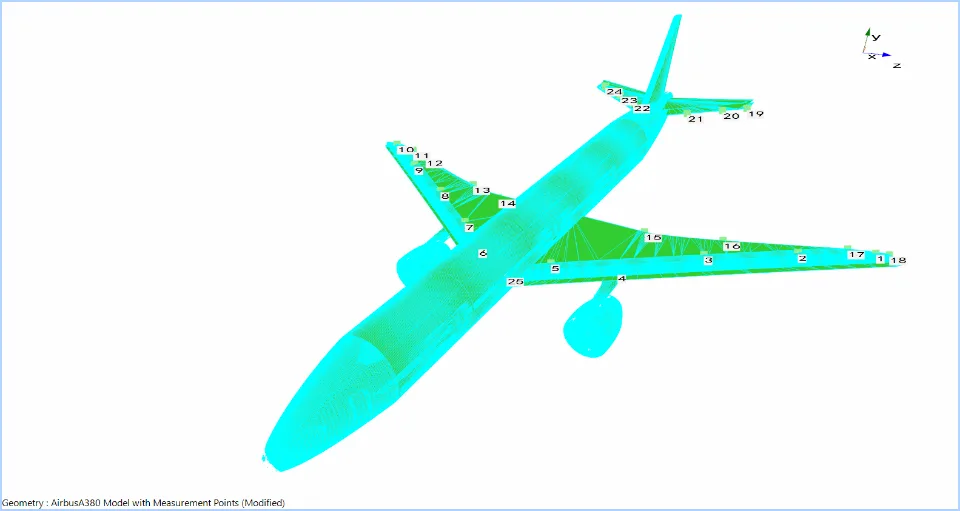
On the practical side the note surveys real cases across aerospace, automotive and mechanical engineering: body-in-white and sub-frame modal analysis and vehicle NVH in automotive; scaled airframes, complete satellites and unmanned air vehicles in aerospace, where damping, nonlinearity and accurate force estimation matter most; response prediction and damage detection of tall buildings, soil-structure systems, dams and bridges in civil engineering; and speaker systems and musical instruments in acoustics. It closes with a reference list for further reading.
Tell us the test object and the standard you must meet. An engineer replies within one business day.
High-channel Spider-80X and handheld CoCo-80X capture force/response FRFs, desc…
A complete modal testing and analysis suite for EMA, supporting up to 512 input…
Complete identification toolset from FRF selection to mode shape animation, off…
A single-operator hammer impact modal workflow with double-hit detection, drivi…
Send us the test object, the standard and your lab conditions. You get a configuration list within one business day.