

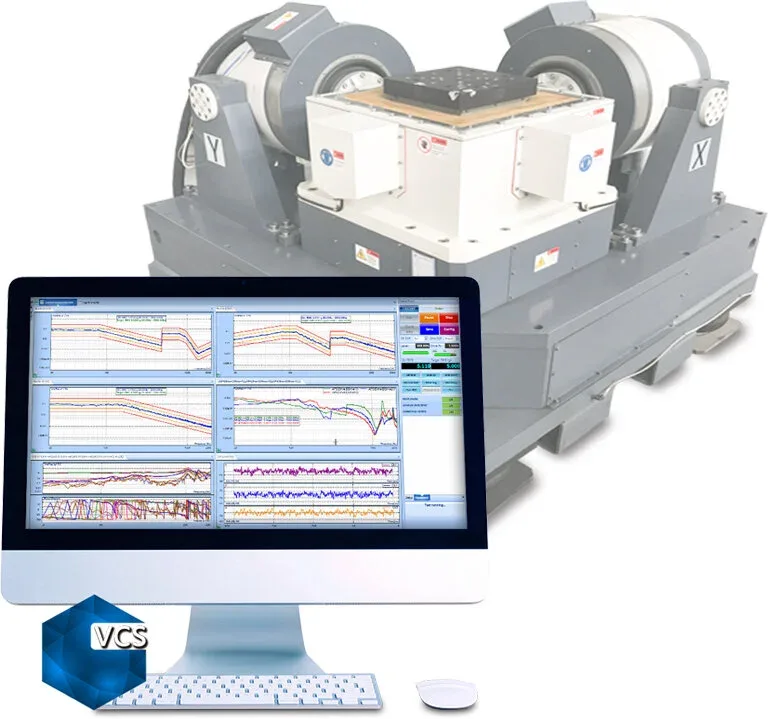
Crystal Instruments MIMO Shaker Systems
From MESA single-axis multi-exciter arrangements to 6-DOF eight-shaker tables…
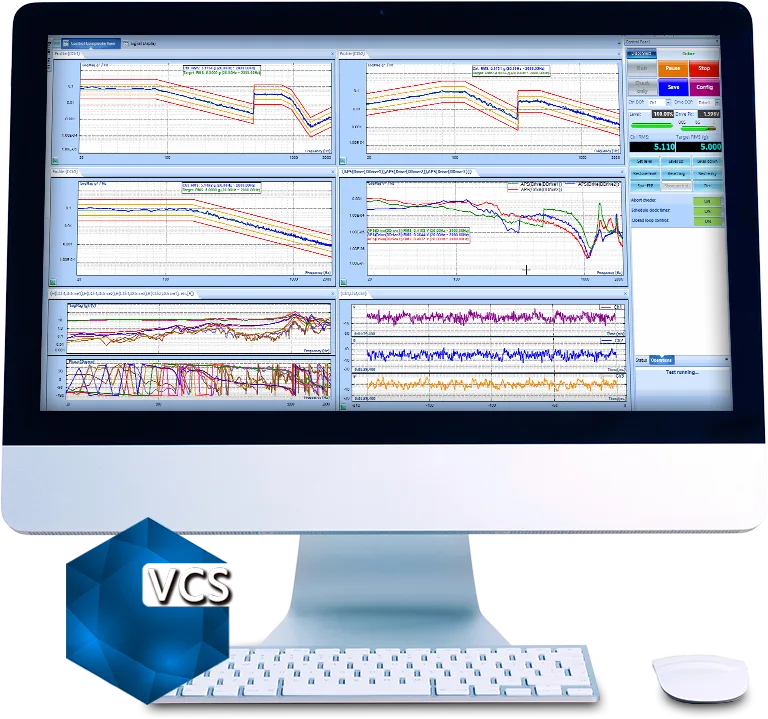
One controller synchronizing multiple exciters across six MIMO control types: Random, Sine, Classical Shock, TTH, SRS and TWR.
Made by Crystal Instruments Corporation. Supplied and supported in China by WTC (West Technology Corporation). · Manufacturer page ↗
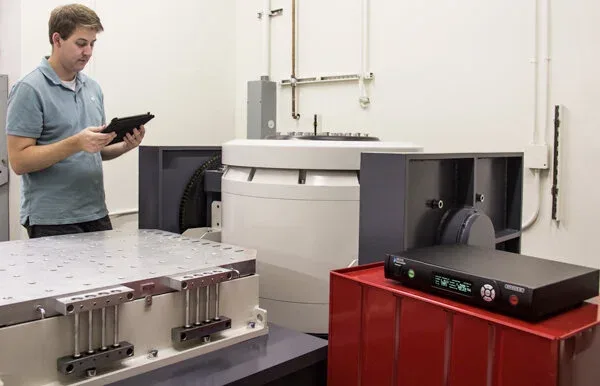
MIMO vibration testing has gained huge momentum over the past decade through the development of multiple shaker table systems, the availability of Multiple-Input Multiple-Output vibration controllers, and the readiness of standards such as MIL-STD 810G method 527 and the IEST DTE 022 working group recommendation. A complete MIMO system includes six control types: MIMO Random, MIMO Sine, MIMO Classical Shock, MIMO Transient Time History (TTH), MIMO Shock Response Spectrum (SRS), and MIMO Time Waveform Replication (TWR).
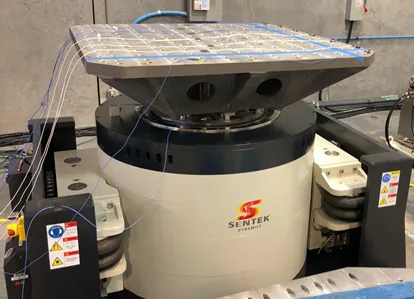
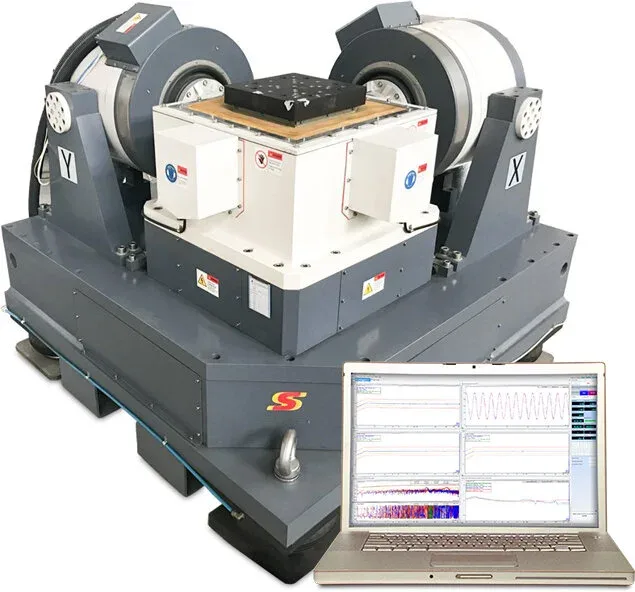
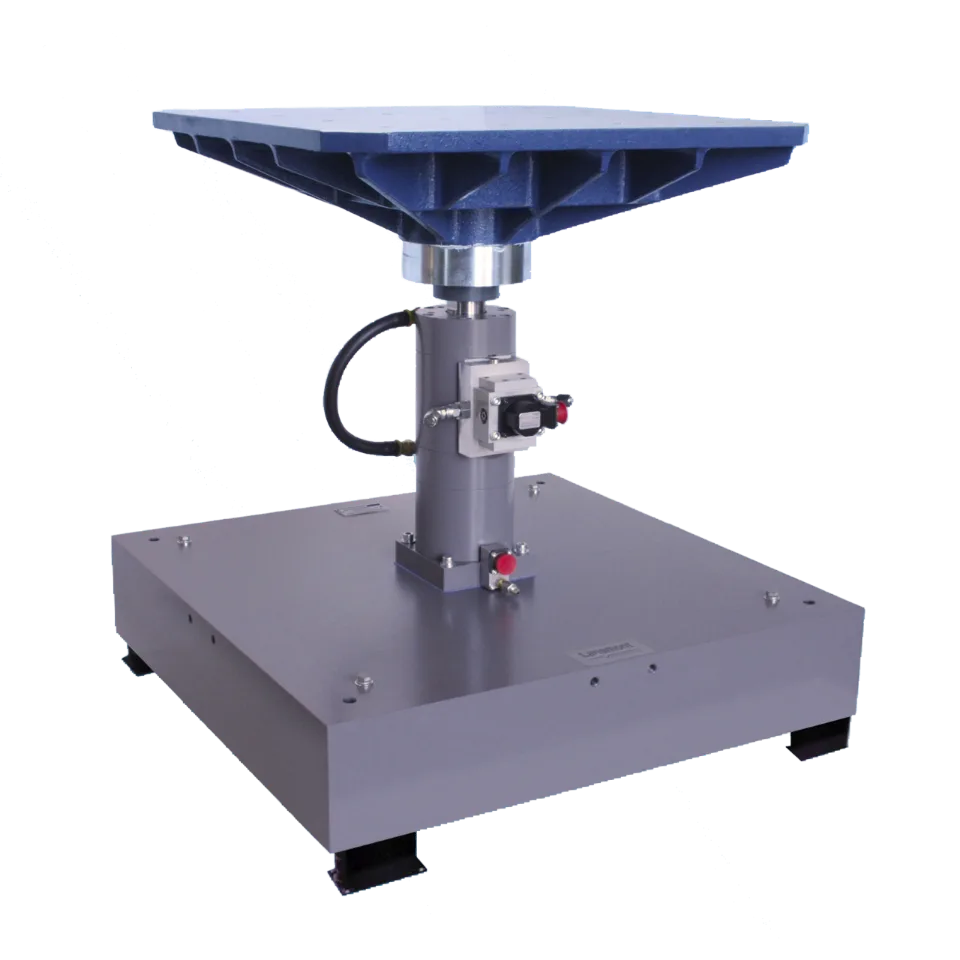
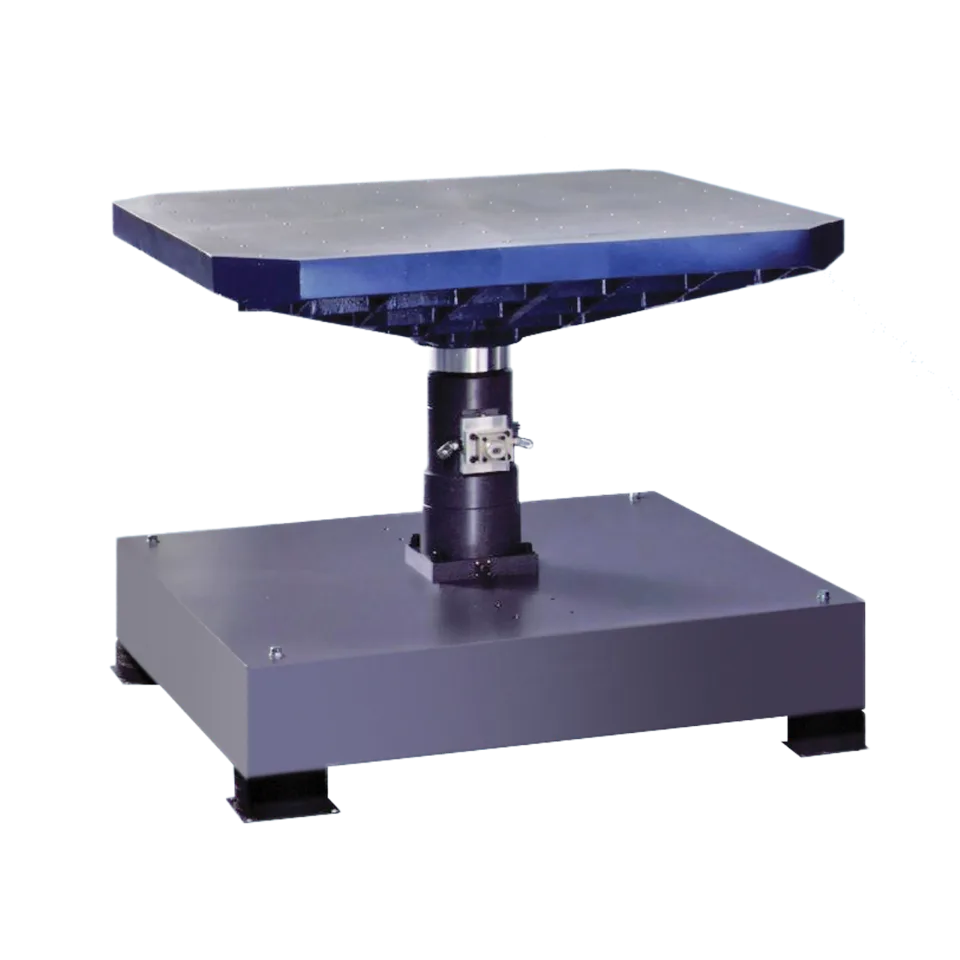
System size ranges from Multiple-Exciter Single-Axis (MESA, two or more shakers) up to Multiple-Exciter Multiple-Axis (MEMA), i.e. a three-axis translational shaker table such as an earthquake testing table, or a 6-DOF Multi-Axis Shaker Table (MAST). Real structural testing needs excitation from all directions, and single-exciter (SDOF) testing must rely on the dynamics of the test article to distribute energy; when the article is very slender, or large and heavy enough to need more than one exciter for sufficient energy, MIMO becomes necessary. MIMO distributes vibration energy across more than one axis in a controlled manner without relying on the article's dynamics, and allows more degrees of freedom to account for impedance matches and in-service boundary conditions.
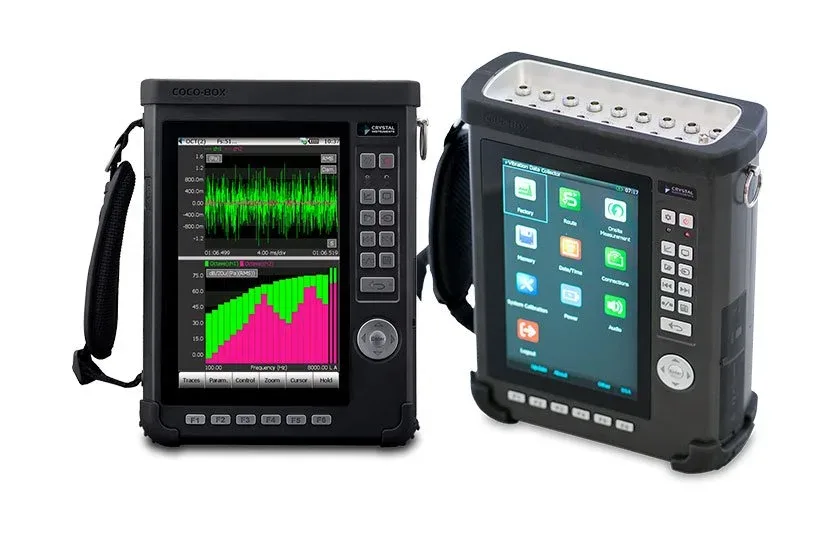
The Spider-80M MIMO Vibration Test Controller is based on the efficient Spider-80Xi architecture and is dedicated to MIMO VCS control and MIMO structural testing. A Spider system can consist of one or more front-ends that the user combines from those detected on the same LAN, with the software validating and displaying each front-end's attributes. Black Box mode lets a supported front-end acquire data without a connected PC: the PC only configures the system before the test and downloads data after, while the front-end runs a preset schedule during the test.
Vibration tests are managed through an MSSQL Server database that stores signal files, test setups and UUT information, searchable by keyword, time or date, on a local computer or a LAN server. Measurement quantities span acceleration, velocity, displacement, force, strain, torque, temperature, voltage, angle, phase, resistance, tacho speed, pressure, frequency, angular velocity, current, sound pressure and mass, and the interface offers English, Russian, Japanese and both Simplified and Traditional Chinese, switchable without reinstalling.
| Model | Input channels | Dynamic range | DAC resolution | Storage |
|---|---|---|---|---|
| Spider-80M | 16 / 24 / 32 / 48 / 56 | 160 dBFS | 24 bit | — |
| Spider-81 / 81B | — | 160 dBFS | 24 bit | 4 GB flash |
| Spider-101i | — | — | — | — |
Scroll sideways for all columns
Tell us the test object and the standard you must meet. An engineer replies within one business day.
From MESA single-axis multi-exciter arrangements to 6-DOF eight-shaker tables…
Full random, sine and shock control for single-axis shakers, with up to 100 dB…
Closed-loop random, sine and shock vibration testing that drives electrodynamic…
Modular multiple-axis vibration testing that scales to 512 channels, covering t…
Send us the test object, the standard and your lab conditions. You get a configuration list within one business day.