

Crystal Instruments Acoustic Analysis Software
Real-time fractional-octave and sound level meter analysis from 1/1 to 1/12 oct…
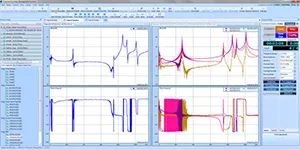
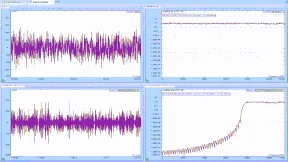
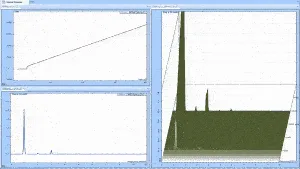
Three FRF methods in one package: FFT, swept sine and multi-resolution spectrum, with resolution down to 0.000001 Hz and up to 160 dB dynamic range.
Made by Crystal Instruments Corporation. Supplied and supported in China by WTC (West Technology Corporation). · Manufacturer page ↗
The Frequency Response Function (FRF) is a foundational measurement in dynamic signal analysis, defined as the ratio of a structure's response (acceleration, velocity or displacement) to the excitation force taken as reference. It condenses the input-output behavior of a structure into a single frequency-domain curve and underpins resonance, damping and stiffness assessment. EDM dynamic signal analysis software provides three ways to measure FRF: FFT based, swept-sine based, and multi-resolution spectrum based.
The FFT method uses broadband excitation such as an impact pulse or white noise and is quick to set up; H1, H2, H3 and Hv estimators are all supported so users can handle different noise sources. Swept-sine concentrates energy at the current frequency for a high-fidelity result: sweep rates run from 0.001 to 120 Oct/Min (or 0.001 to 40 Dec/Min) logarithmically and 0.001 to 120 Hz/Sec linearly, tracking filters span 7% to 100% proportional or 1 to 500 Hz fixed, and frequency resolution can reach 0.000001 Hz. The multi-resolution (MR) spectrum method processes the low-frequency band separately, giving far finer low-band resolution; because damping ratios are similar across bands, it can measure damping several times more accurately than a classical FRF.
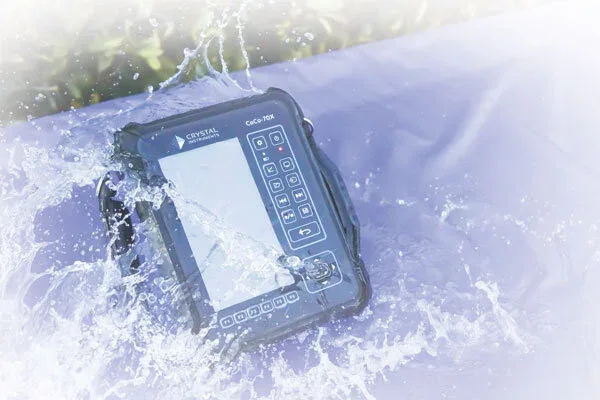
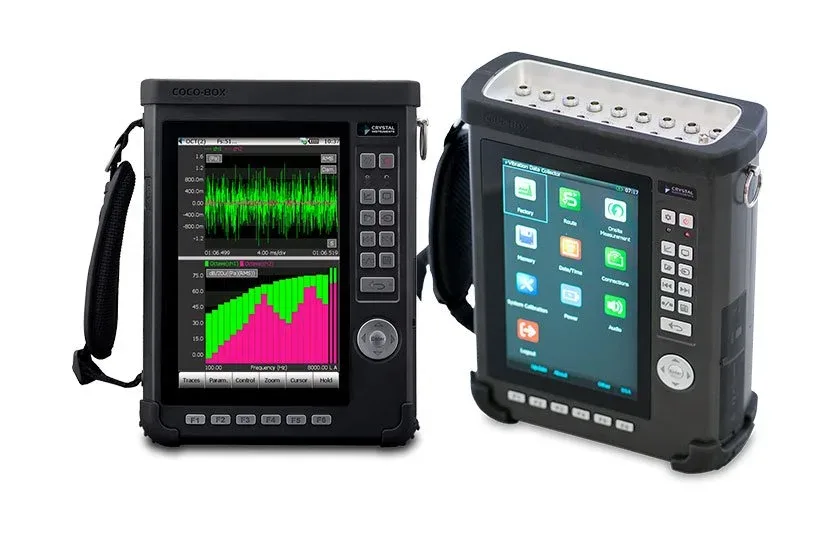
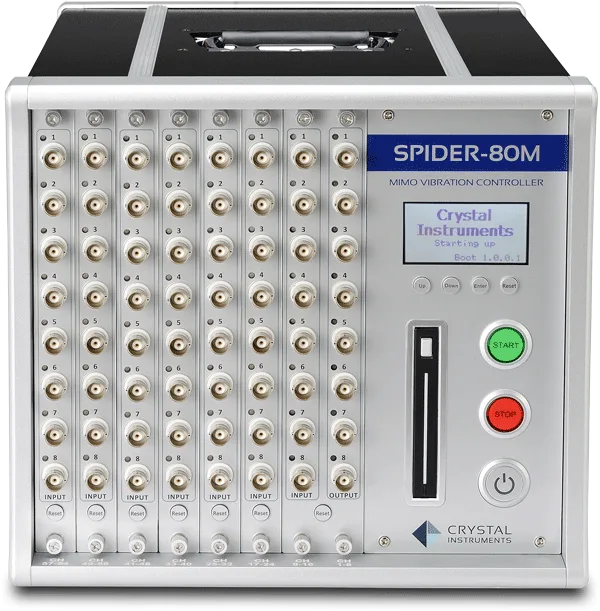
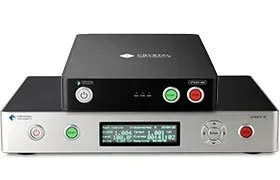
Acquisition runs on Spider and CoCo hardware from 4 to 512 channels at 102.4 kHz or 256 kHz sample rates, with FFT frequency coverage from 46 kHz (Spider-20, Spider-80Xi) to 115.2 kHz (Spider-20H, Spider-80Hi), up to 28800 lines and 100 dB or 160 dB dynamic range. A wide set of windows is available, and typical excitation includes hammer impulse, white and pink noise, shaped random, sine, swept sine and chirp. Test status can be monitored remotely through EDM Cloud, and recorded data can be reprocessed offline with EDM Post Analyzer.
| Sample rate | 102.4 kHz / 256 kHz |
|---|
Full datasheet on request.
Tell us the test object and the standard you must meet. An engineer replies within one business day.
Real-time fractional-octave and sound level meter analysis from 1/1 to 1/12 oct…
A free ATFX reading API — two Windows DLLs that let C#, Python, Matlab and LabV…
FIR, IIR and decimation filters running in real time on the front-end, designed…
Speed-referenced order-domain analysis with dual tachometer inputs and up to 12…
Send us the test object, the standard and your lab conditions. You get a configuration list within one business day.